
Styles
Six languages of planted aquariums.
Before we begin a brief, it helps to know which aesthetic tradition pulls you. Below is a short education in the major schools of aquascaping: their origins, their philosophy, and the kind of room they tend to live in.
 I
IStyle I
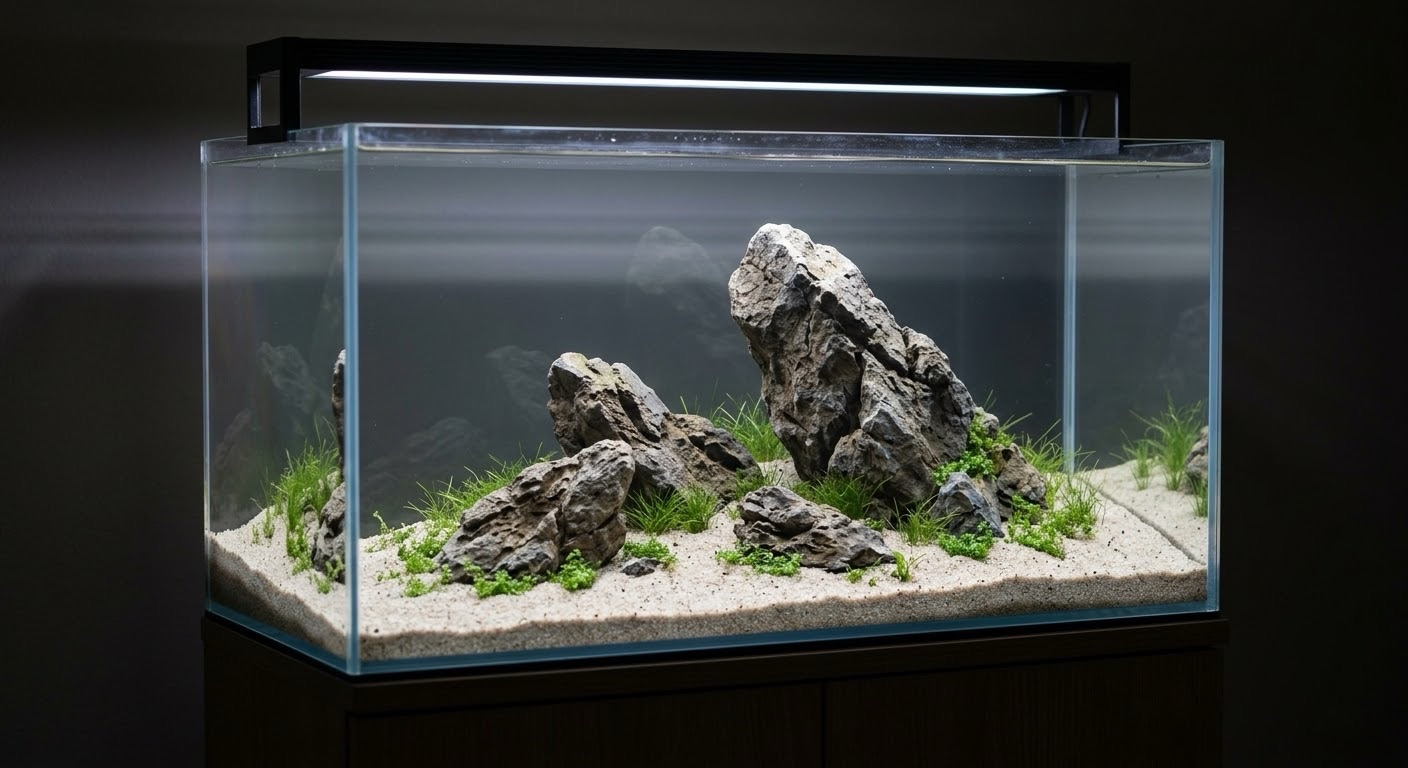
Iwagumi
Japanese stone, considered.
Iwagumi is governed by restraint. A single dominant stone, the oyaishi, sets the composition. Two to four secondary stones support it, never echo it. The visual rhythm is asymmetric and grounded in the rule of thirds. Plants are minimal and carpet the foreground. Everything points to the silence of the arrangement.
Read the style →
Intermediate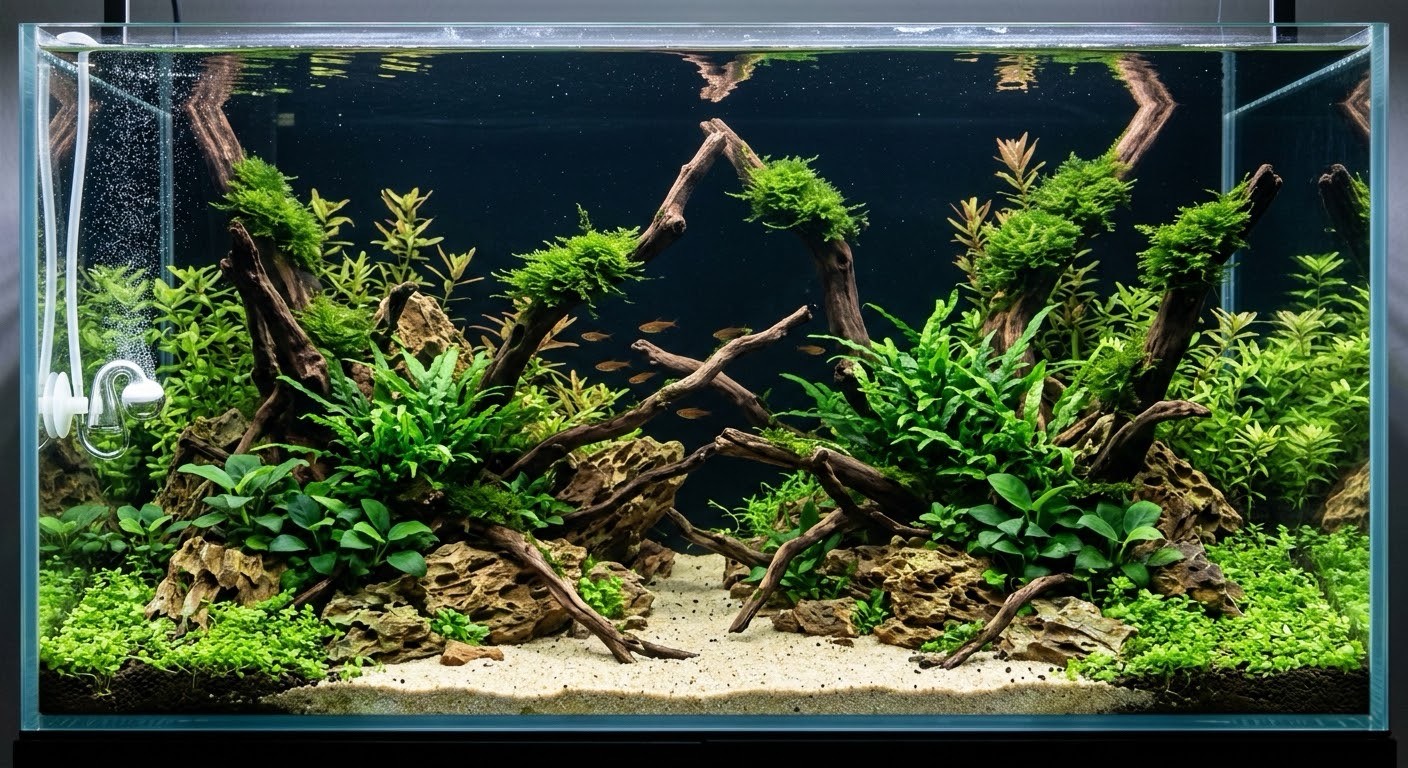 II
IIStyle II
Nature Style
A forest cross-section, in glass.
Where Iwagumi distills, Nature Style layers. A focal point, usually driftwood or a stone arrangement, sits in the foreground or one-third position. Behind it, plants build in tiers from short carpets to mid-ground shrubs to tall stems at the back. The viewer's eye is led from the front foreground toward an implied horizon. The result feels like a slice of forest brought indoors.
Read the style →
Intermediate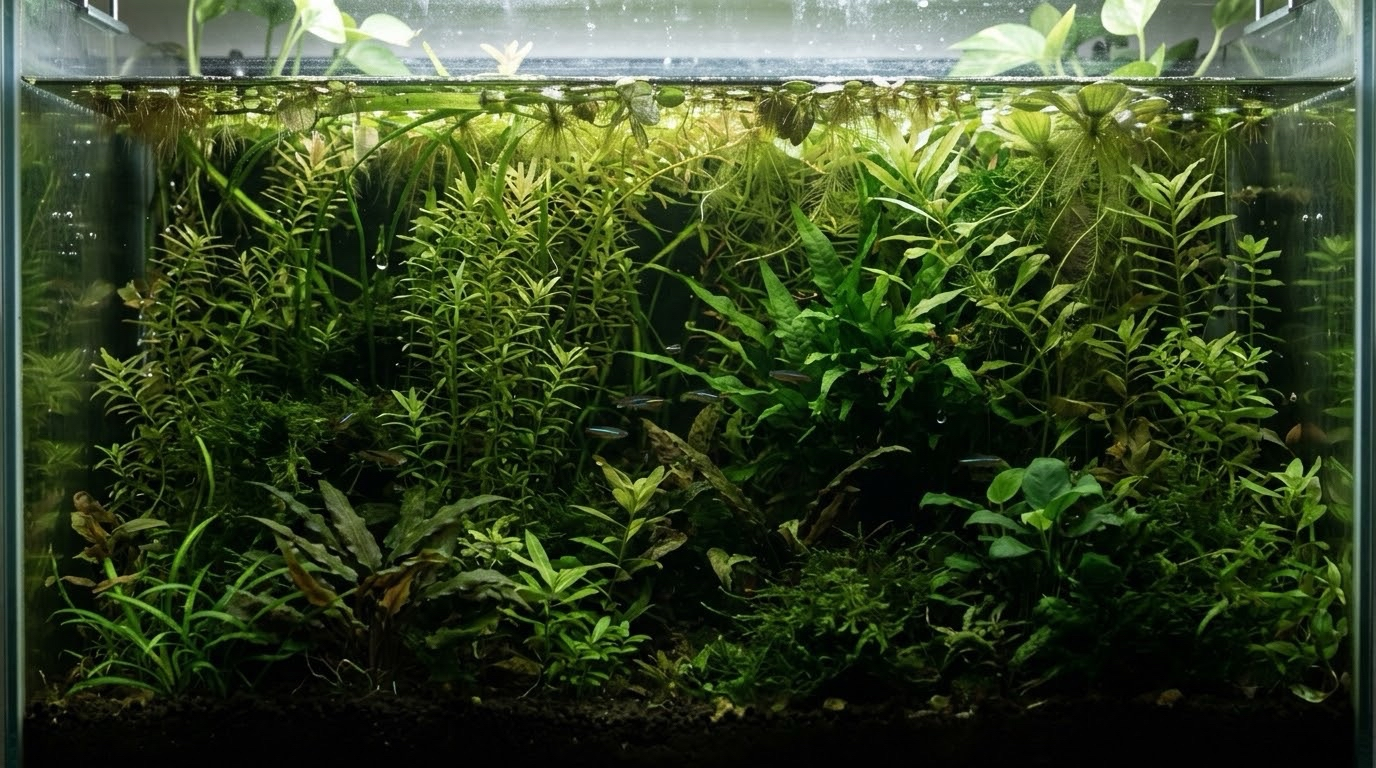 III
IIIStyle III
Jungle
Quiet wildness, slow grown.
Jungle tanks let plants grow as they will. Tall stems break the water surface. Floating plants soften the light. The hardscape, if any, disappears behind growth within months. There are no rigid rules of composition; the goal is the felt quality of an overgrown, undisturbed corner of the world.
Read the style →
Beginner-friendly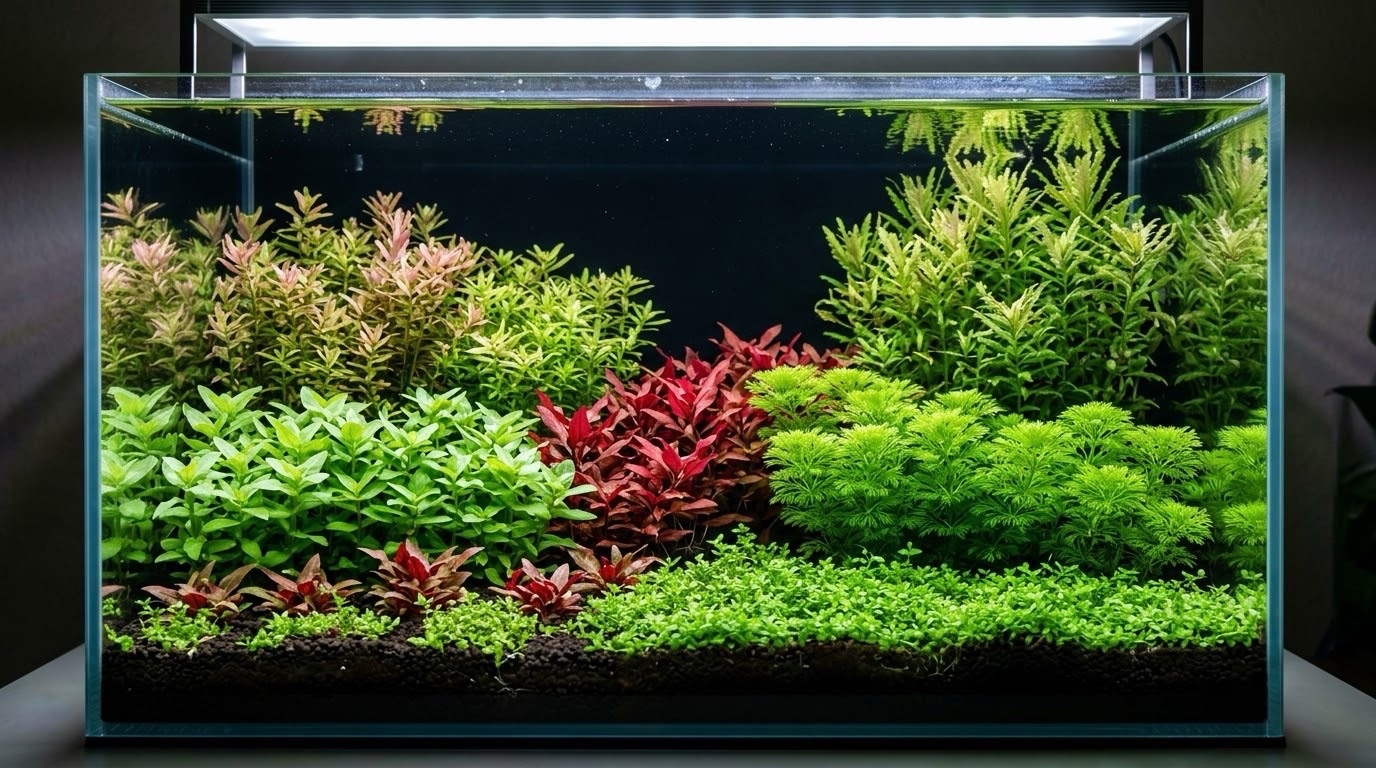 IV
IVStyle IV
Dutch
An underwater garden, terraced.
A Dutch tank is composed in rigid terraced rows, called straat (streets), each row a single species set in deliberate contrast to its neighbors. Color, texture, and leaf shape are orchestrated. There is no driftwood and no stone. Plants alone do the work.
Read the style →
Advanced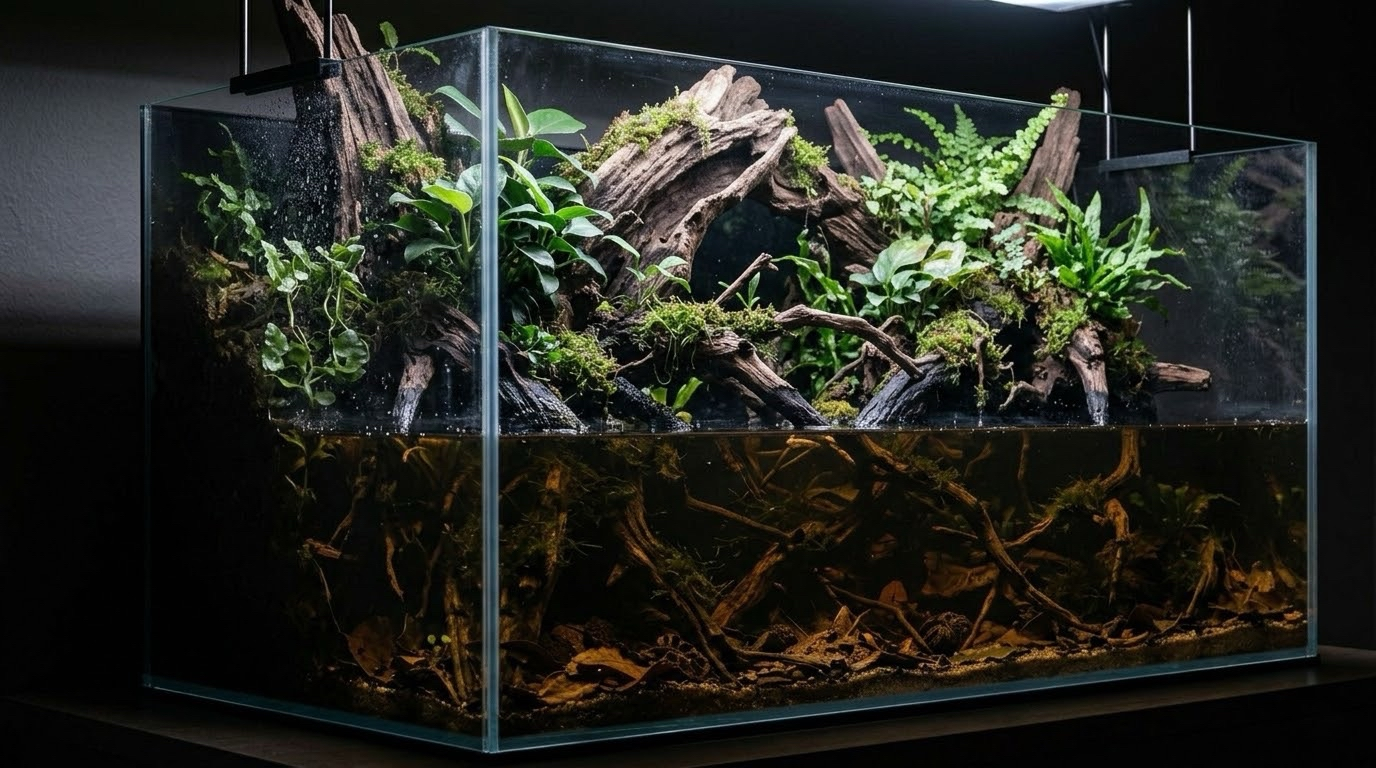 V
VStyle V
Blackwater Biotope
Amazon, in three feet of glass.
A biotope tank is an exercise in restraint and accuracy. Wood, leaf litter, and almond bark steep the water into amber. Substrate is minimal, often just fine sand. Plants are sparse to absent, as they would be in nature. The livestock comes from a single geographic region, and water chemistry is matched to the source.
Read the style →
Intermediate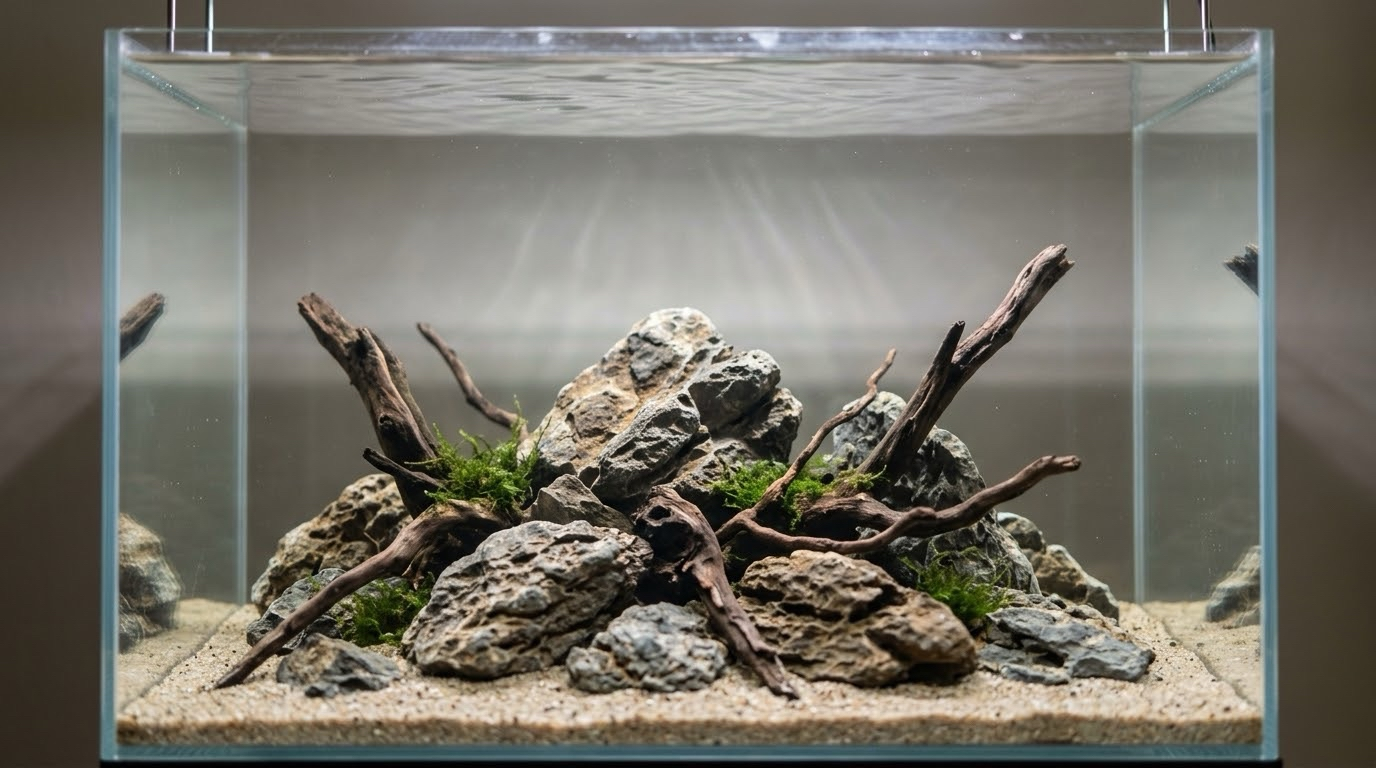 VI
VIStyle VI
Hardscape-Forward
Wood and stone, the artwork.
These tanks treat negative space as a primary element. A single piece of driftwood, or a careful stone composition, dominates the visual field. Plants appear only as moss veils, tiny epiphytes on the wood, or sparse stems in the substrate. The tank reads as sculpture you can keep alive.
Read the style →
Intermediate
Not sure which?
Begin with a brief, not a decision.
Send us your space, budget, and how you want the tank to feel. We'll suggest the style that fits, and the one that fits, sometimes, isn't the one you came in expecting.