Styles · V of VI
← All stylesStyle V
Blackwater Biotope.
Amazon, in three feet of glass.
Origin
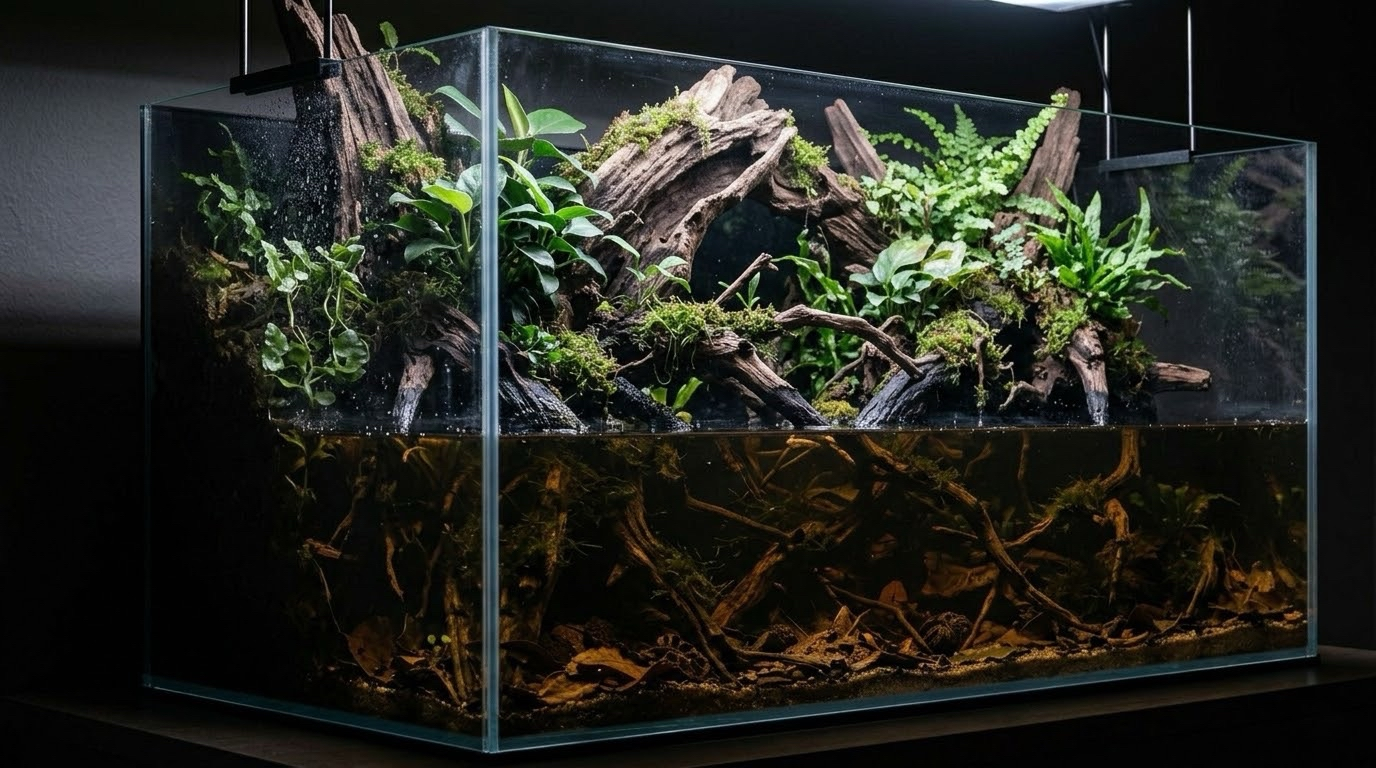
Blackwater biotope tanks replicate the tannin-stained forest streams of the Amazon, the Rio Negro, and Southeast Asian peat swamps. They prioritize ecology over decoration.
Philosophy
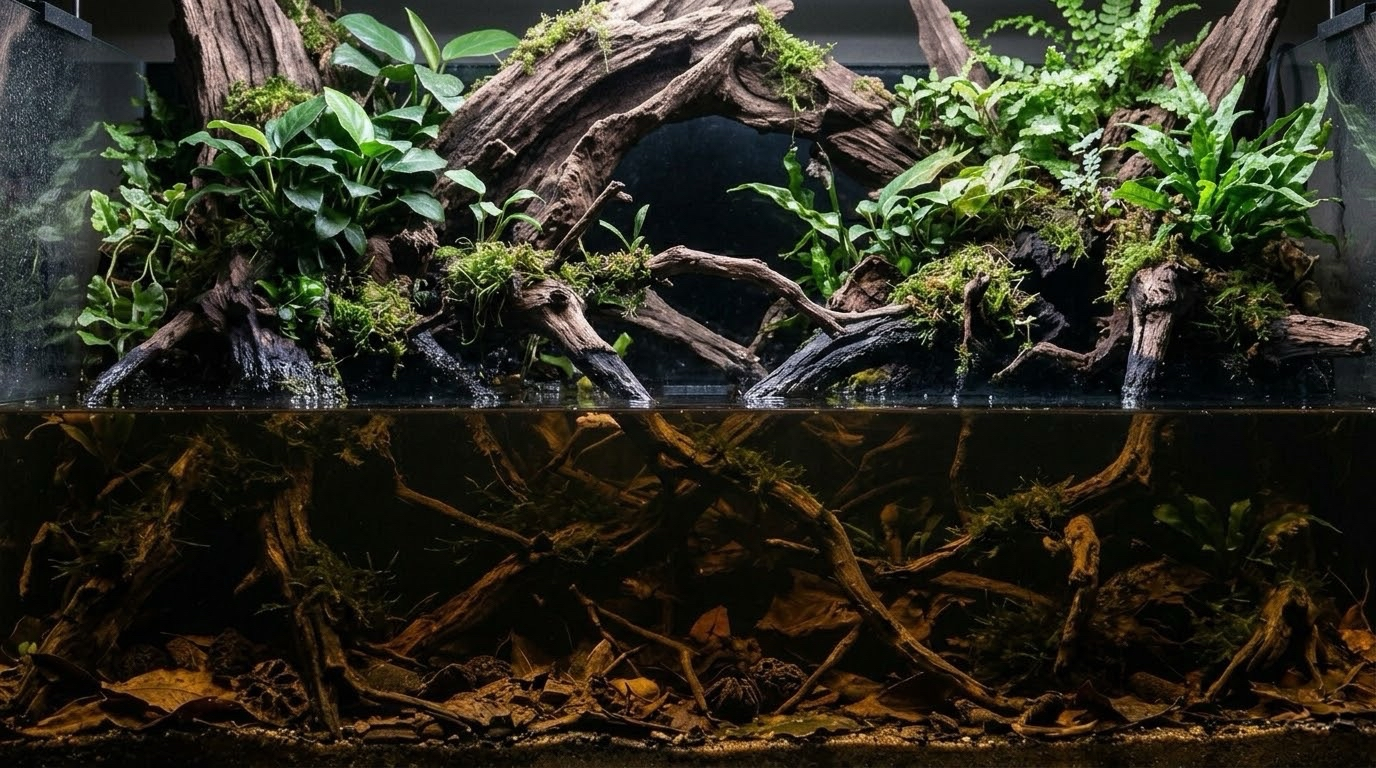
A biotope tank is an exercise in restraint and accuracy. Wood, leaf litter, and almond bark steep the water into amber. Substrate is minimal, often just fine sand. Plants are sparse to absent, as they would be in nature. The livestock comes from a single geographic region, and water chemistry is matched to the source.
What defines it
What makes a blackwater biotope tank a blackwater biotope tank.
- 01
Tannin-stained water from driftwood, leaves, and alder cones
- 02
Leaf litter floor, catappa, oak, beech
- 03
Minimal or no substrate, sometimes just sand
- 04
Biotope-correct stocking, single region, single ecosystem
- 05
Soft, slightly acidic water (pH 5.5–6.5)
In Practice
What it looks like, in glass.
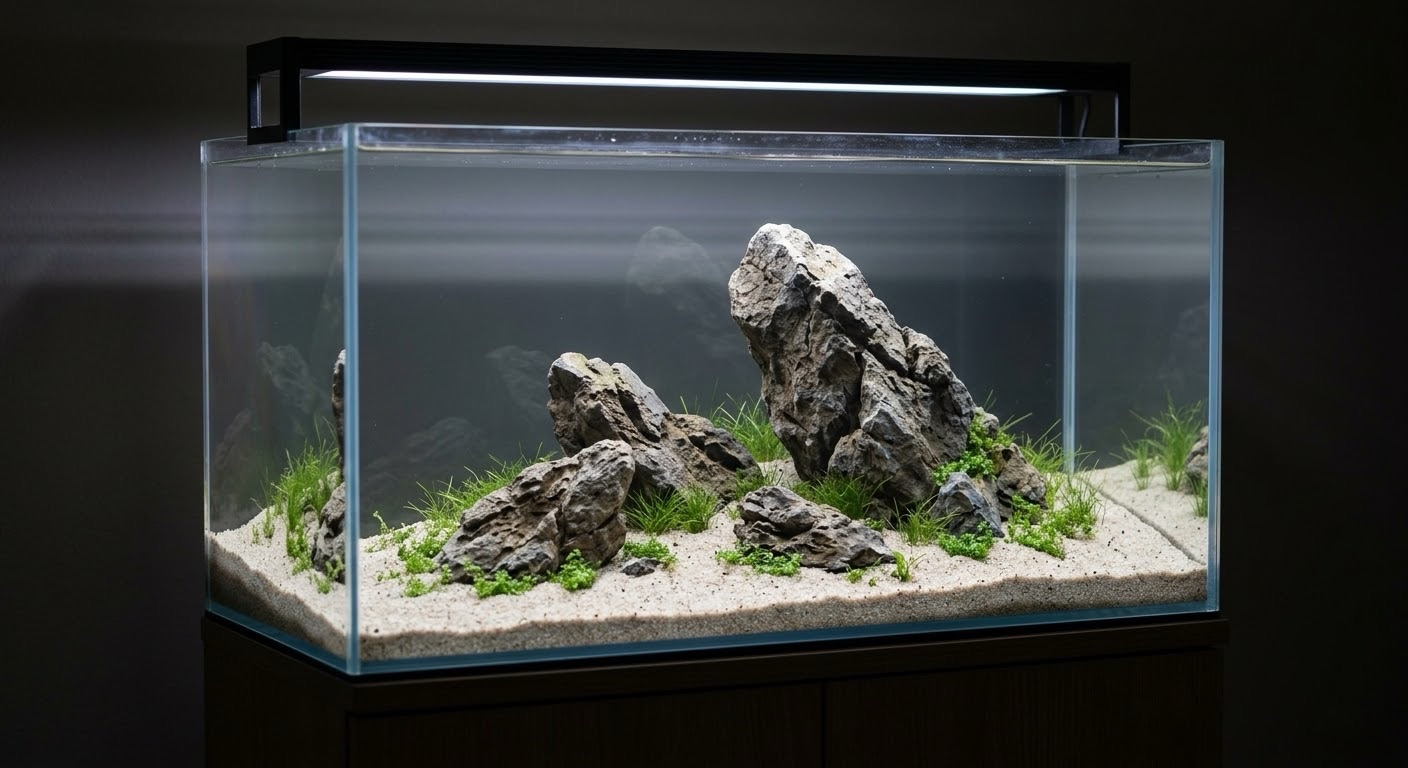
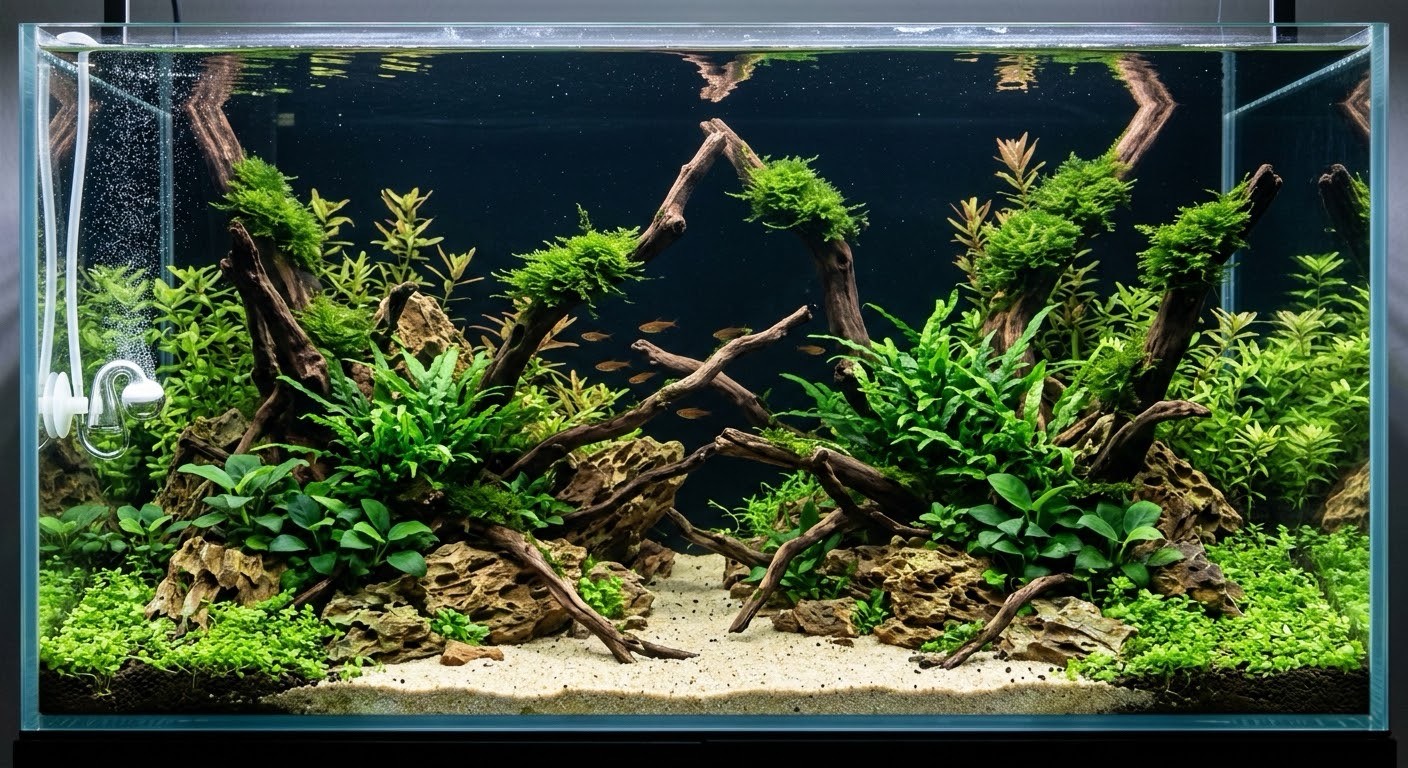
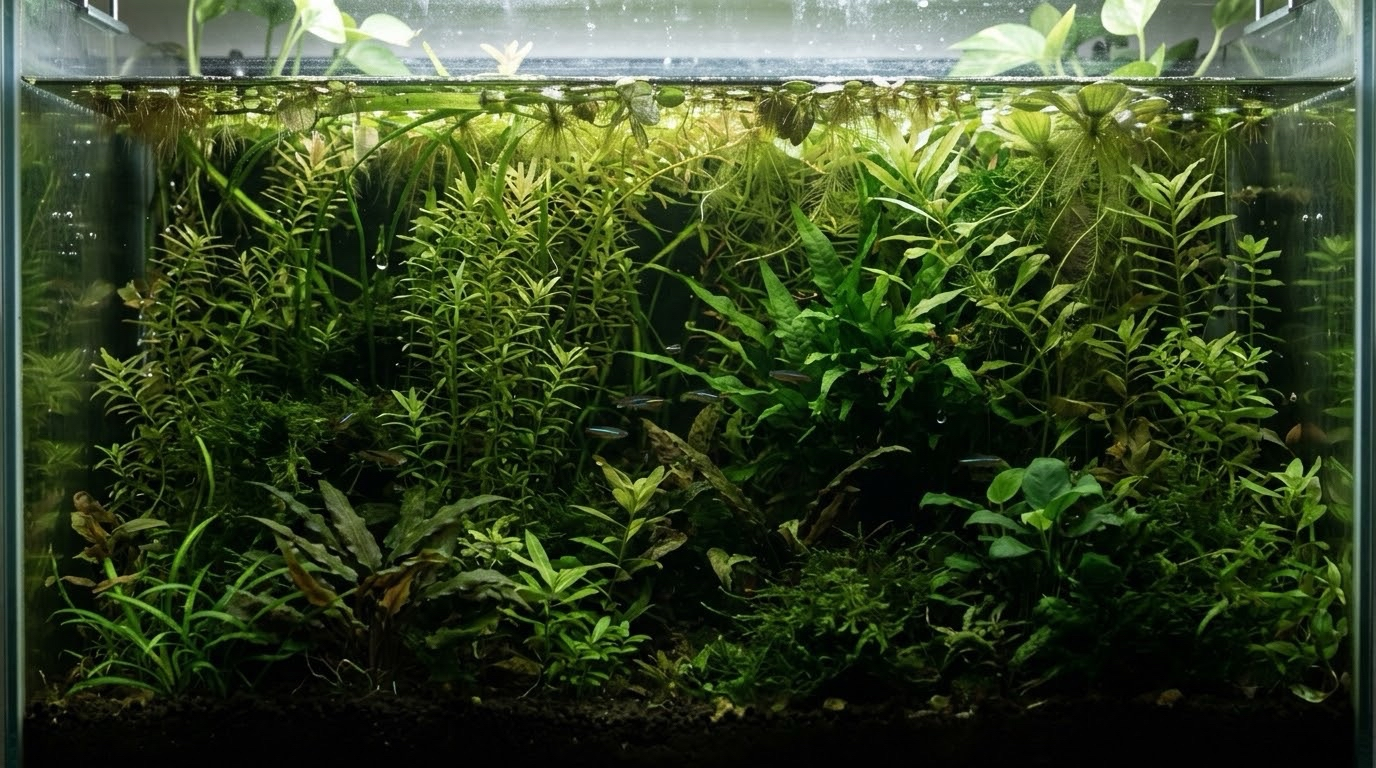
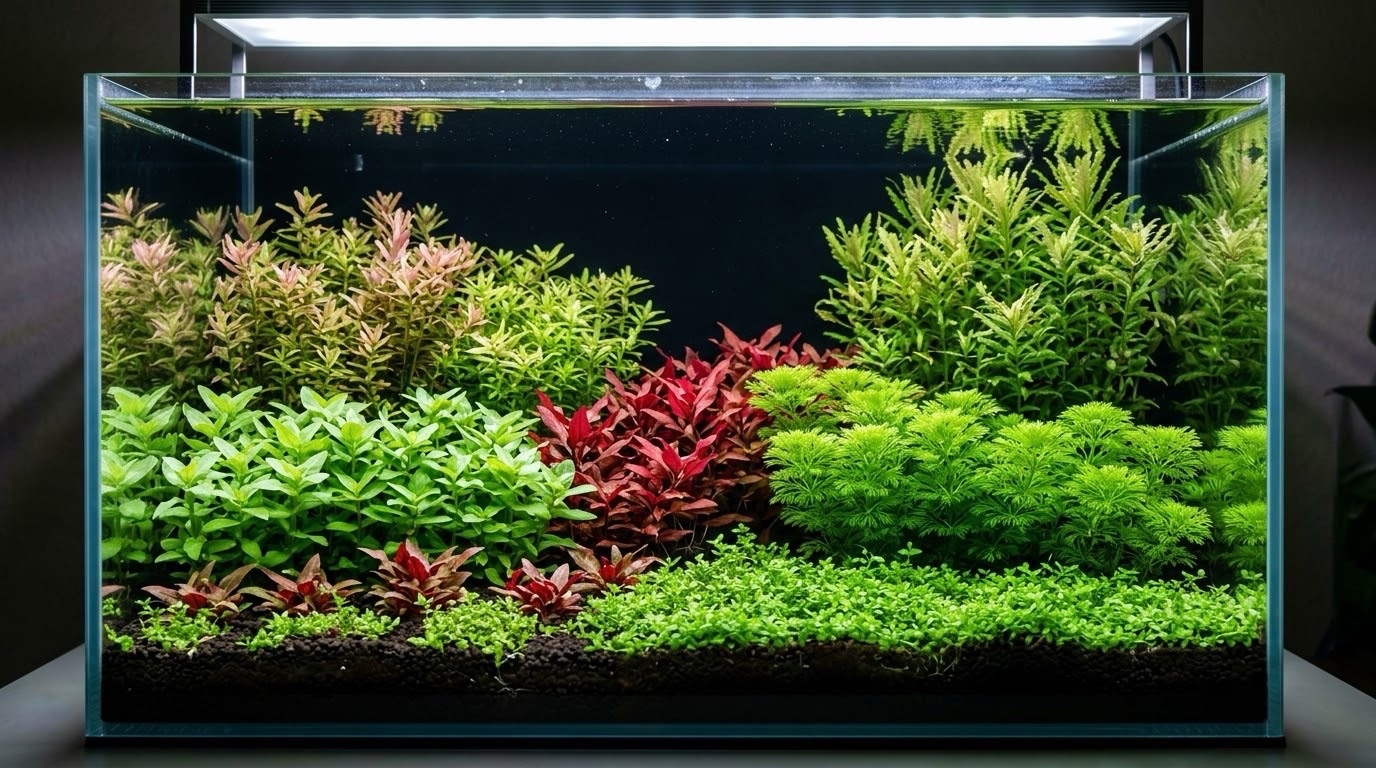
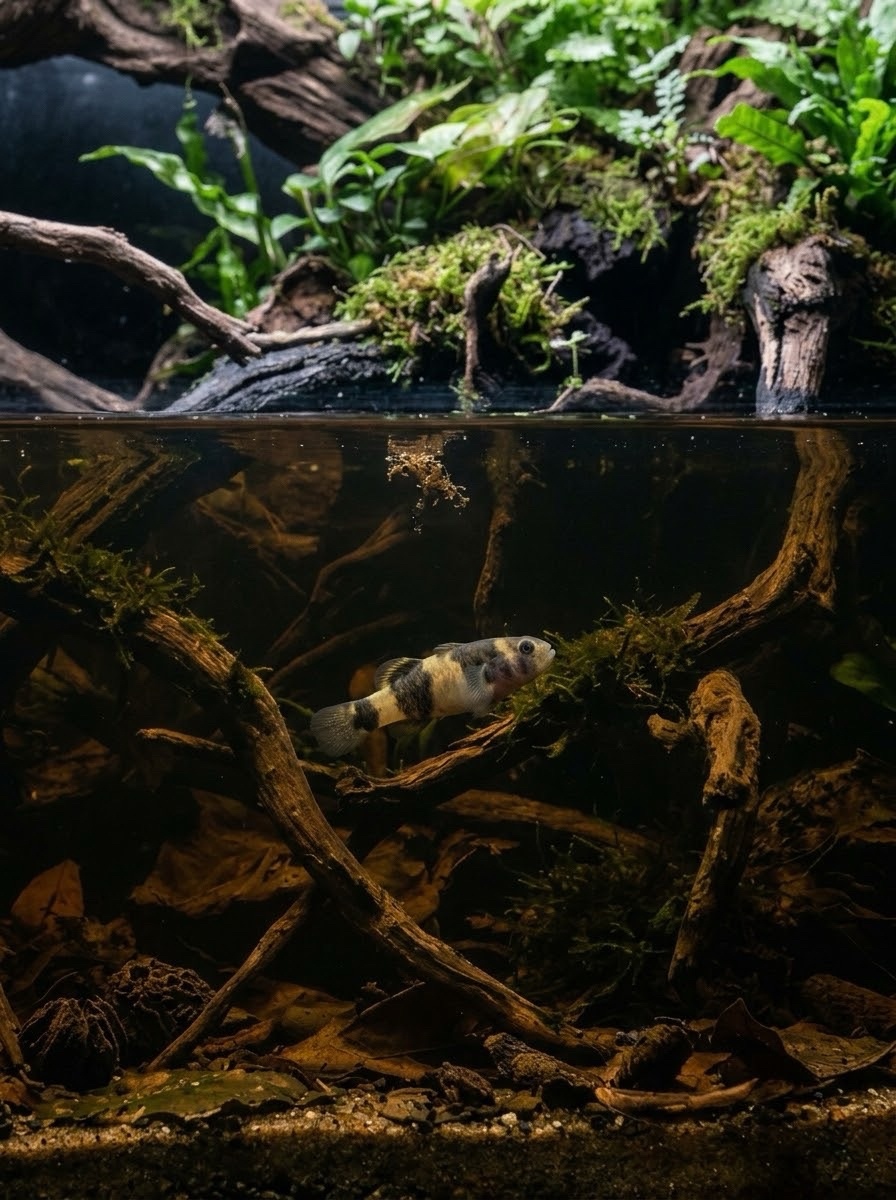
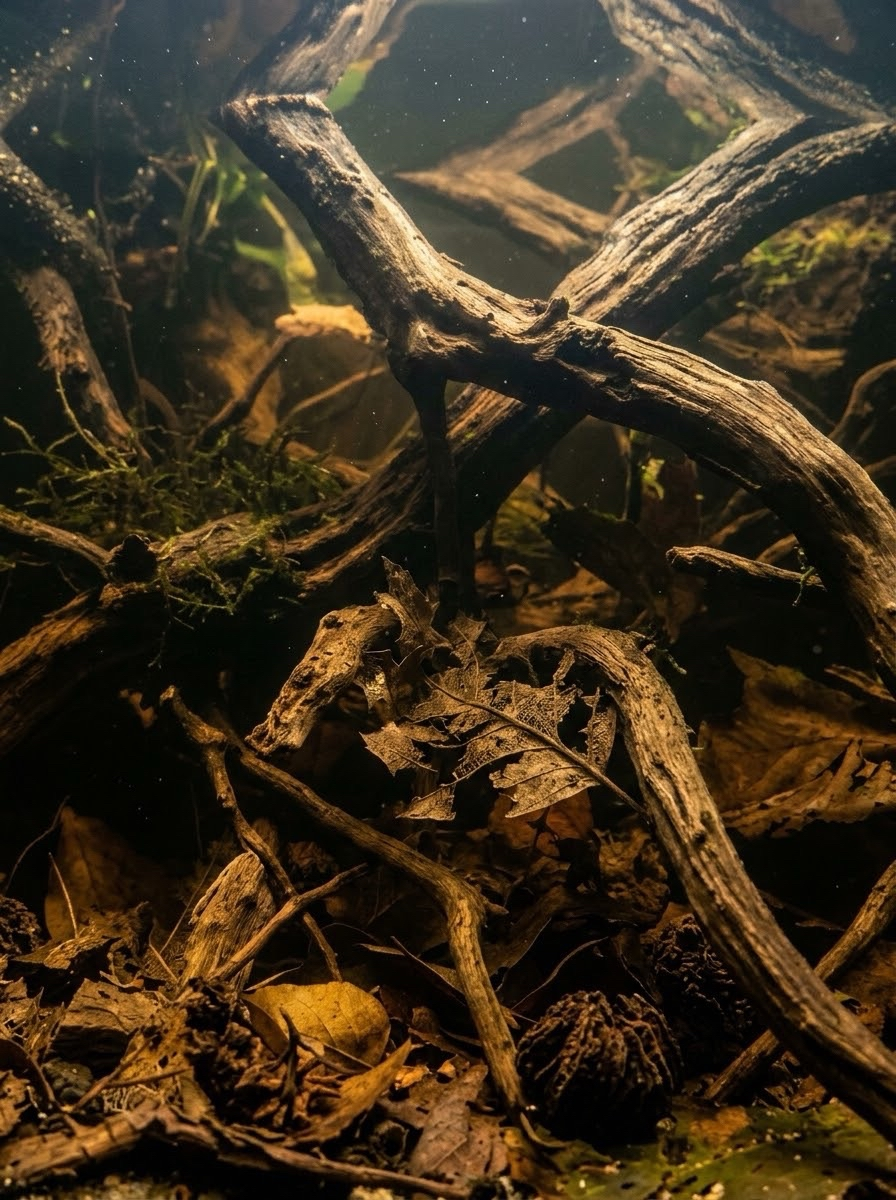
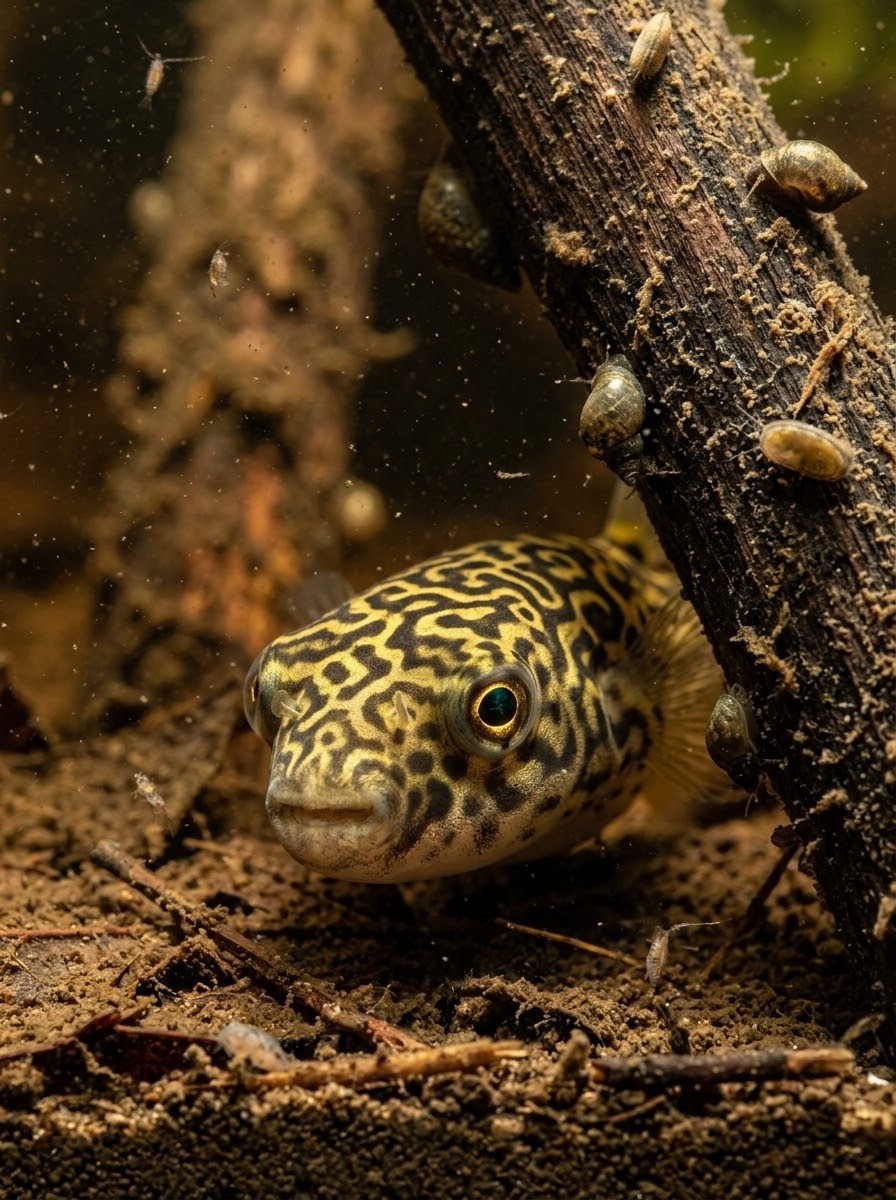
Three angles on the blackwater biotope school, wide composition, mid-detail, and macro.
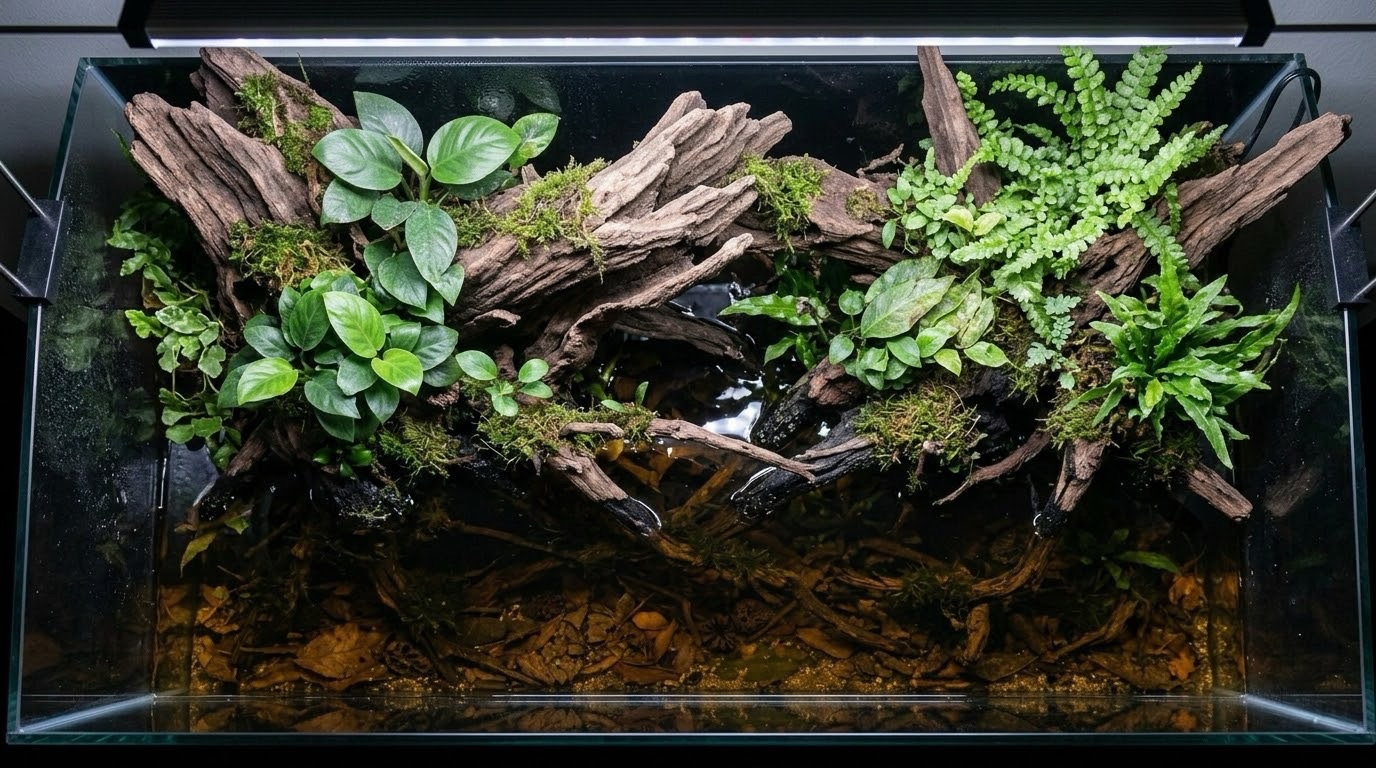
Wide composition
Mid-detail
Atmosphere
Close detail
Plants
The flora most often used.
A working palette, not exhaustive. We adjust species to your water, lighting, and maintenance tolerance.
Often none (biotope-accurate)
Anubias (epiphyte)
Anubias barteri
Java fern (epiphyte)
Microsorum pteropus
Red root floater
Phyllanthus fluitans
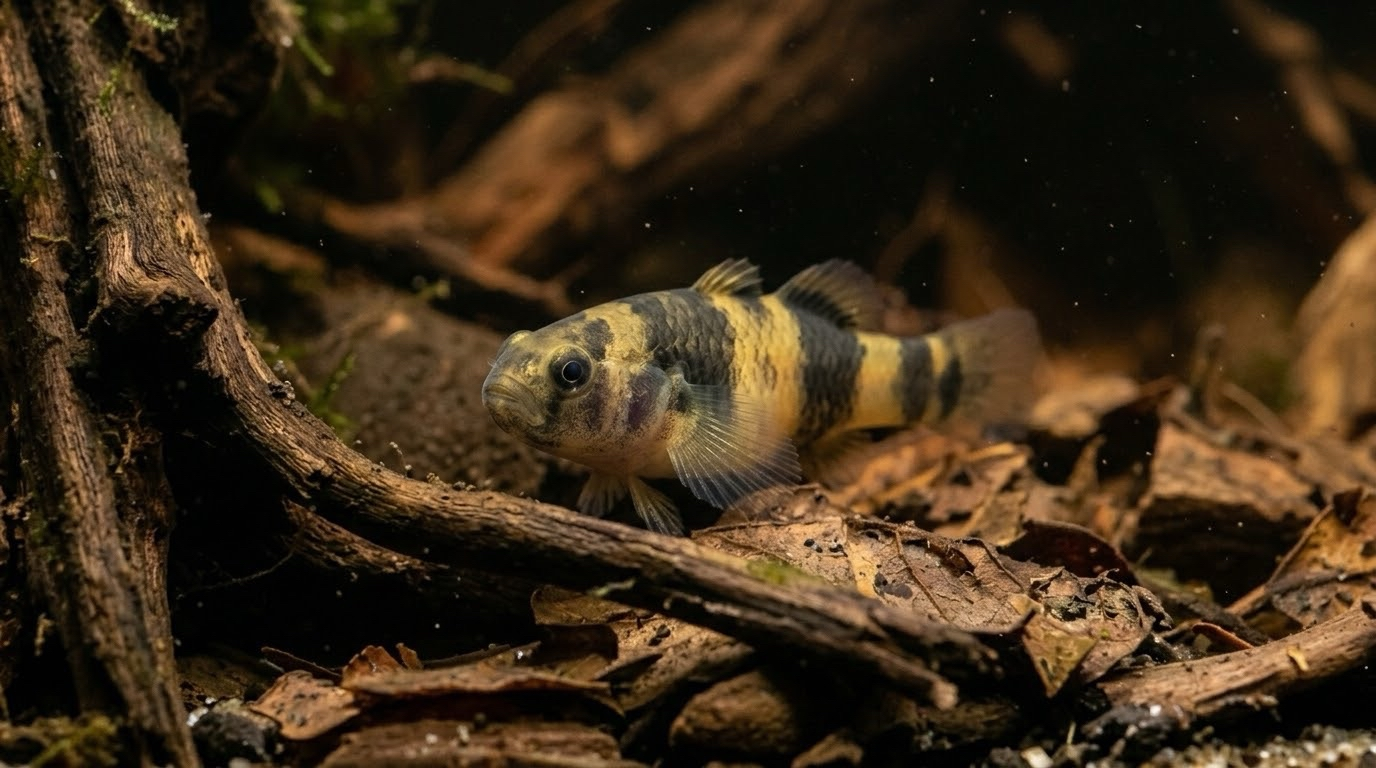
Livestock
Fish and invertebrates that suit.
Species that read visually with the style and tolerate its water conditions. Stocking order matters. We sequence it in your plan.
Cockatoo cichlid
Apistogramma cacatuoides
Agassiz's apisto
Apistogramma agassizii
Wild betta
Betta mahachaiensis
Cardinal tetra
Paracheirodon axelrodi
Marbled hatchetfish
Carnegiella strigata
Specifications
The practical details.
Difficulty
Intermediate
Recommended tank
75 cm and up
Substrate
Fine inert sand, often just a thin layer
Lighting
Low (4–6 hours daily), filtered through tannins
CO₂
Not required
Water chemistry
Soft, acidic, pH 5.5–6.5, low hardness
Best for
Ecology-curious clients, those drawn to specific regions of the world, and anyone who finds tinted water beautiful.
Begin in this style
A Blackwater Biotope tank,
for your space.
Tell us about your room, your budget, and how hands-on you want to be. We'll send back a tailored plan in this tradition.
Other Styles