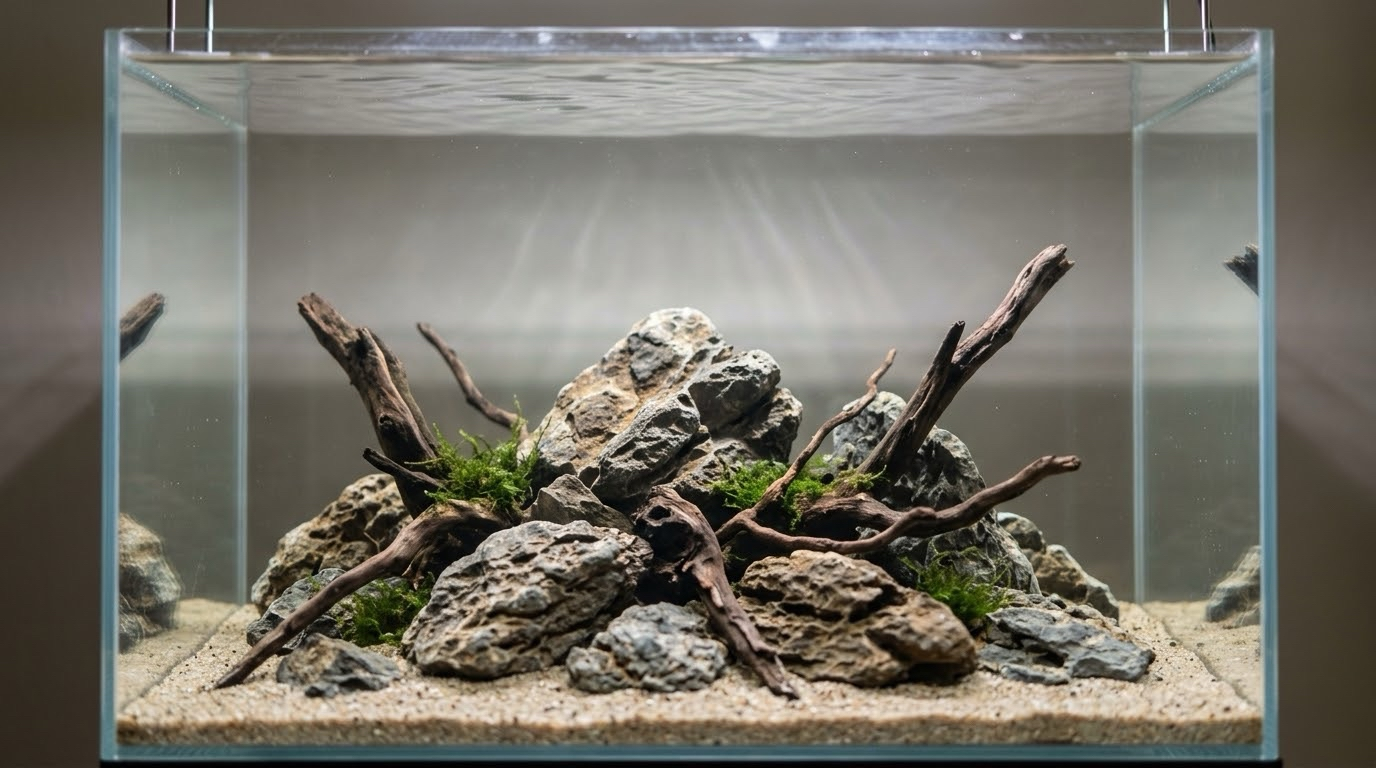
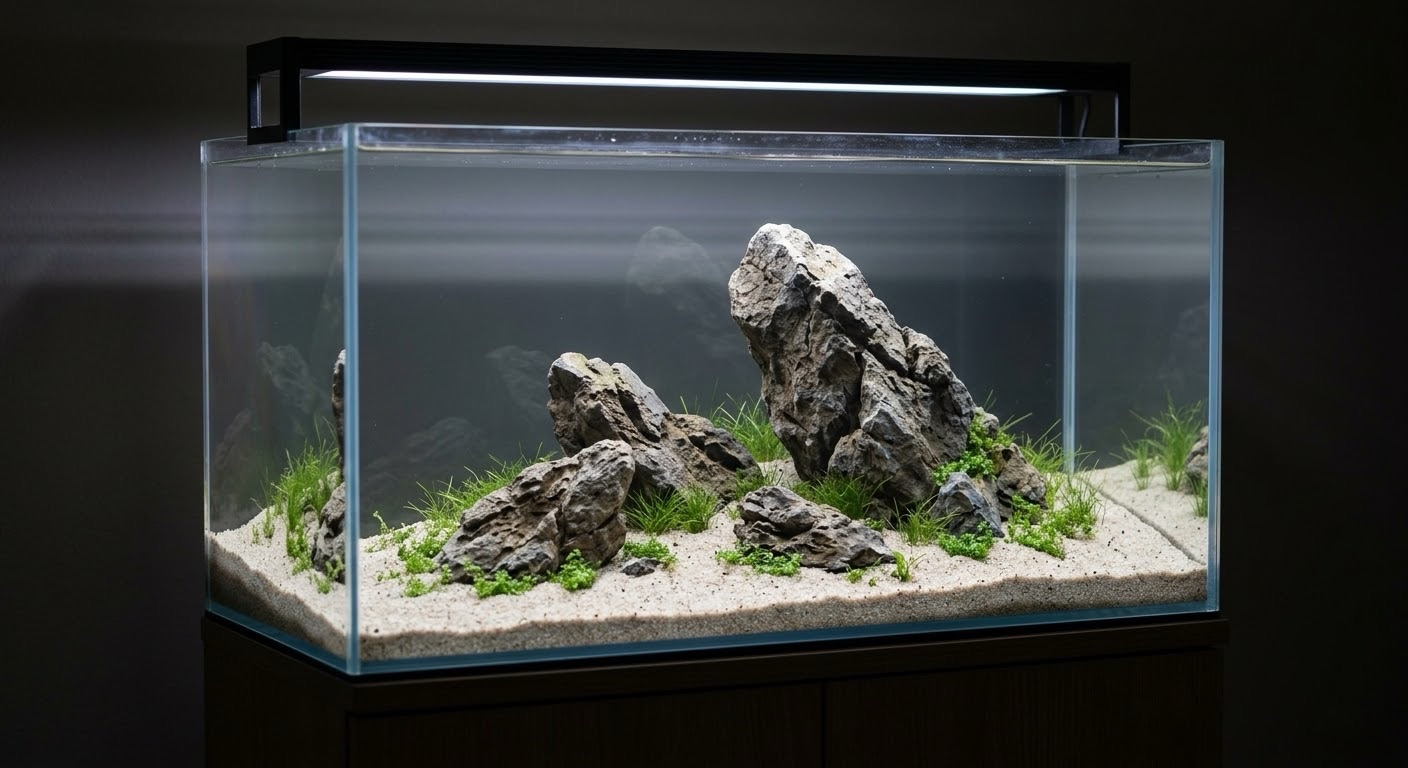
Styles · I of VI
← All stylesStyle I
Iwagumi.
Japanese stone, considered.
Origin
Originating in Japan and popularized worldwide by Takashi Amano, Iwagumi (literally 'rock formation') is the most architectural school of aquascaping. It descends from Japanese garden traditions where stone is the primary subject and water is the canvas.
Philosophy
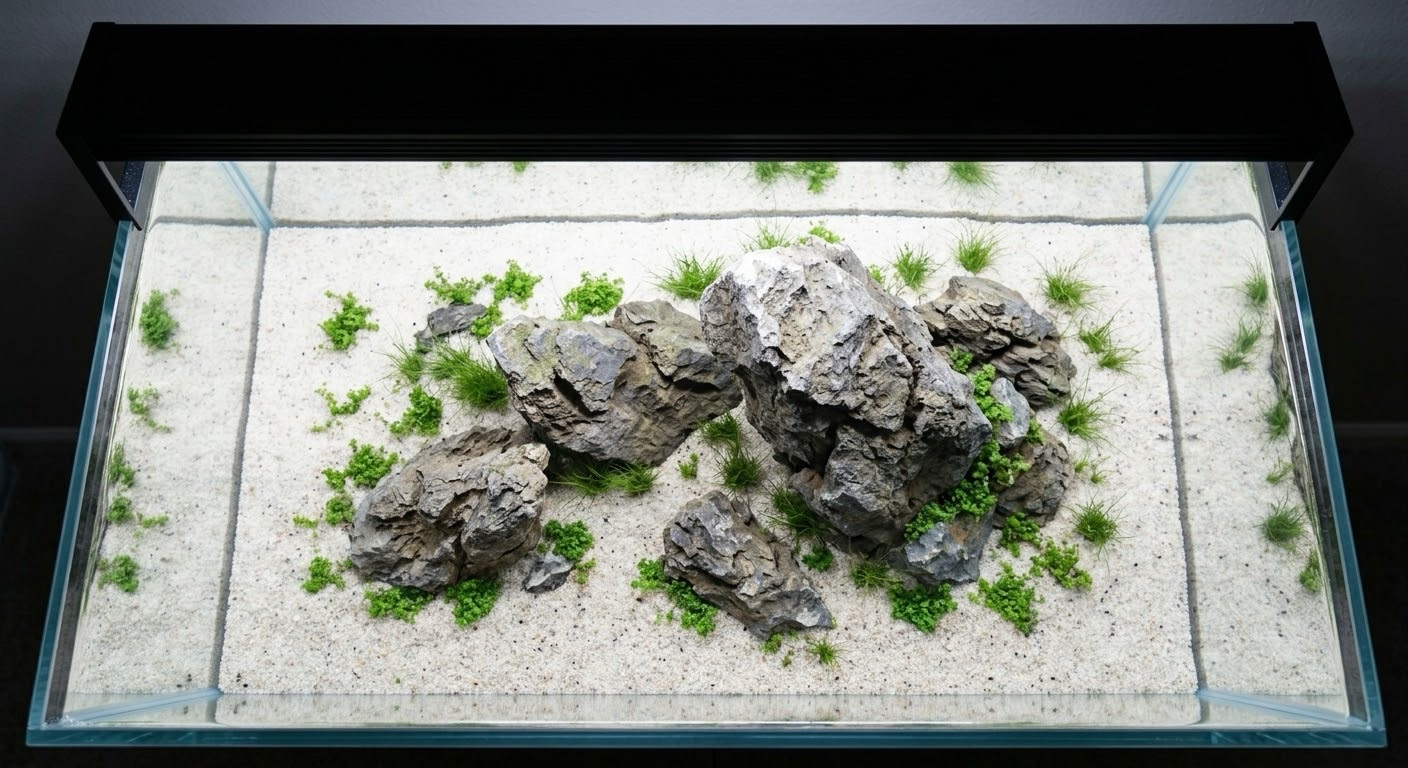
Iwagumi is governed by restraint. A single dominant stone, the oyaishi, sets the composition. Two to four secondary stones support it, never echo it. The visual rhythm is asymmetric and grounded in the rule of thirds. Plants are minimal and carpet the foreground. Everything points to the silence of the arrangement.
What defines it
What makes a iwagumi tank a iwagumi tank.
- 01
One oyaishi (main stone) as the unmistakable focal point
- 02
An odd number of supporting stones (three, five, seven) arranged asymmetrically
- 03
A single carpeting plant species, kept low and even
- 04
Fine sand or 1–3mm grain substrate exposed in the negative space
- 05
No driftwood and no decorative ornament
In Practice
What it looks like, in glass.
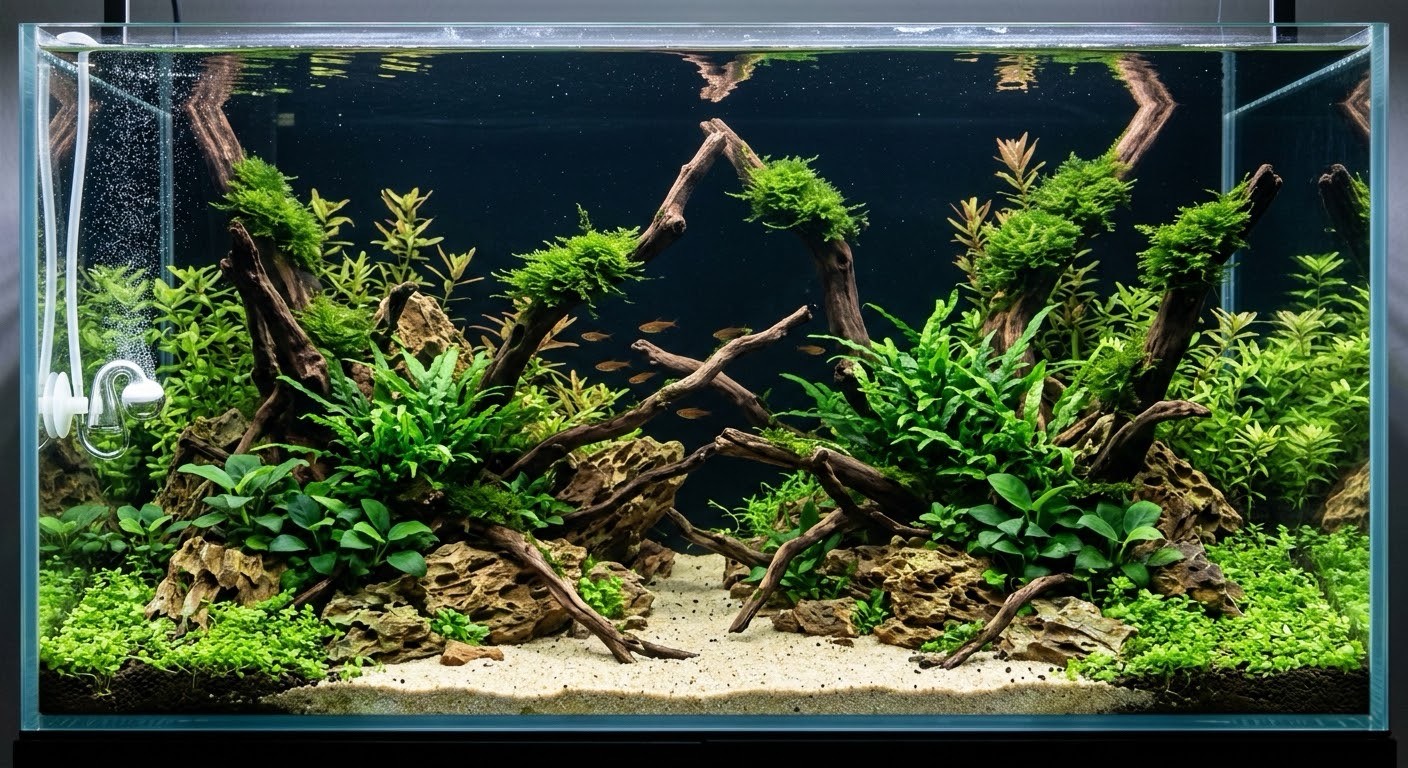
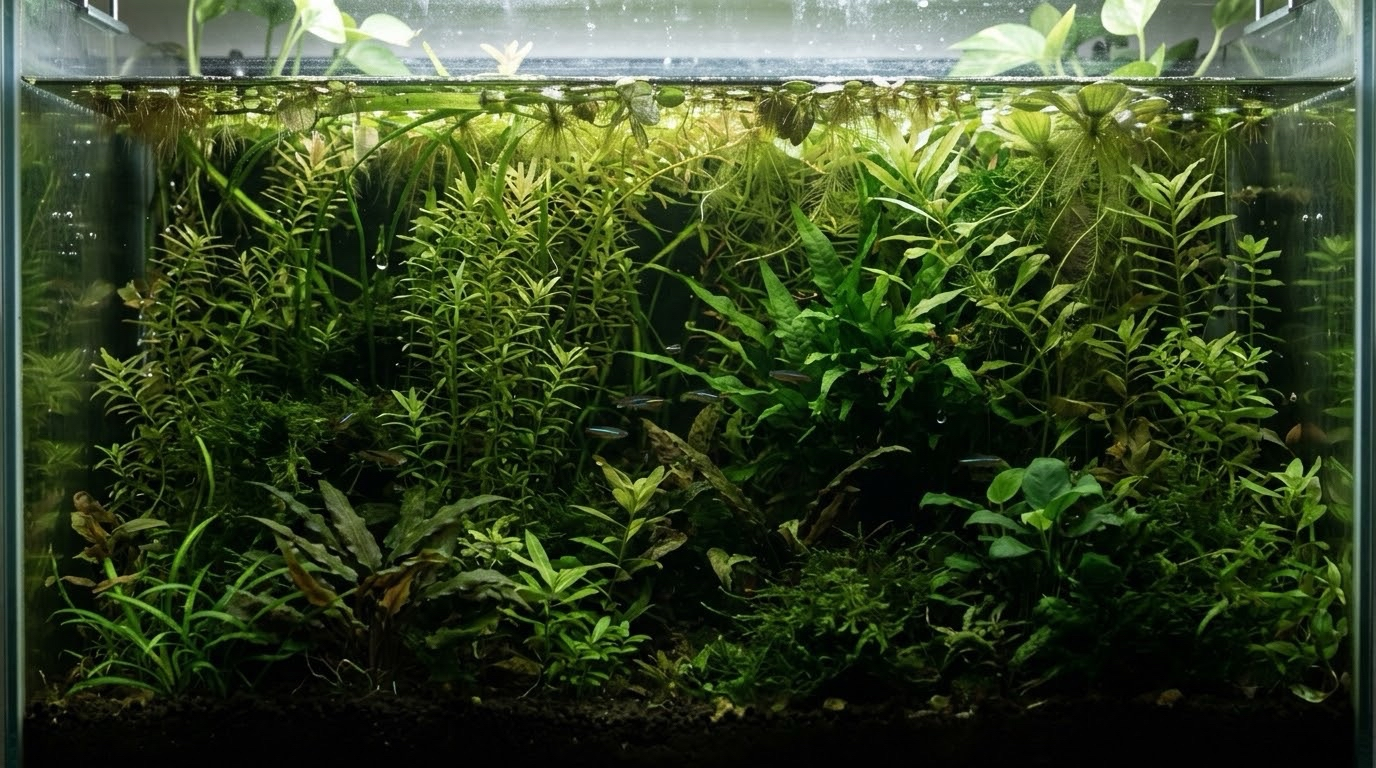
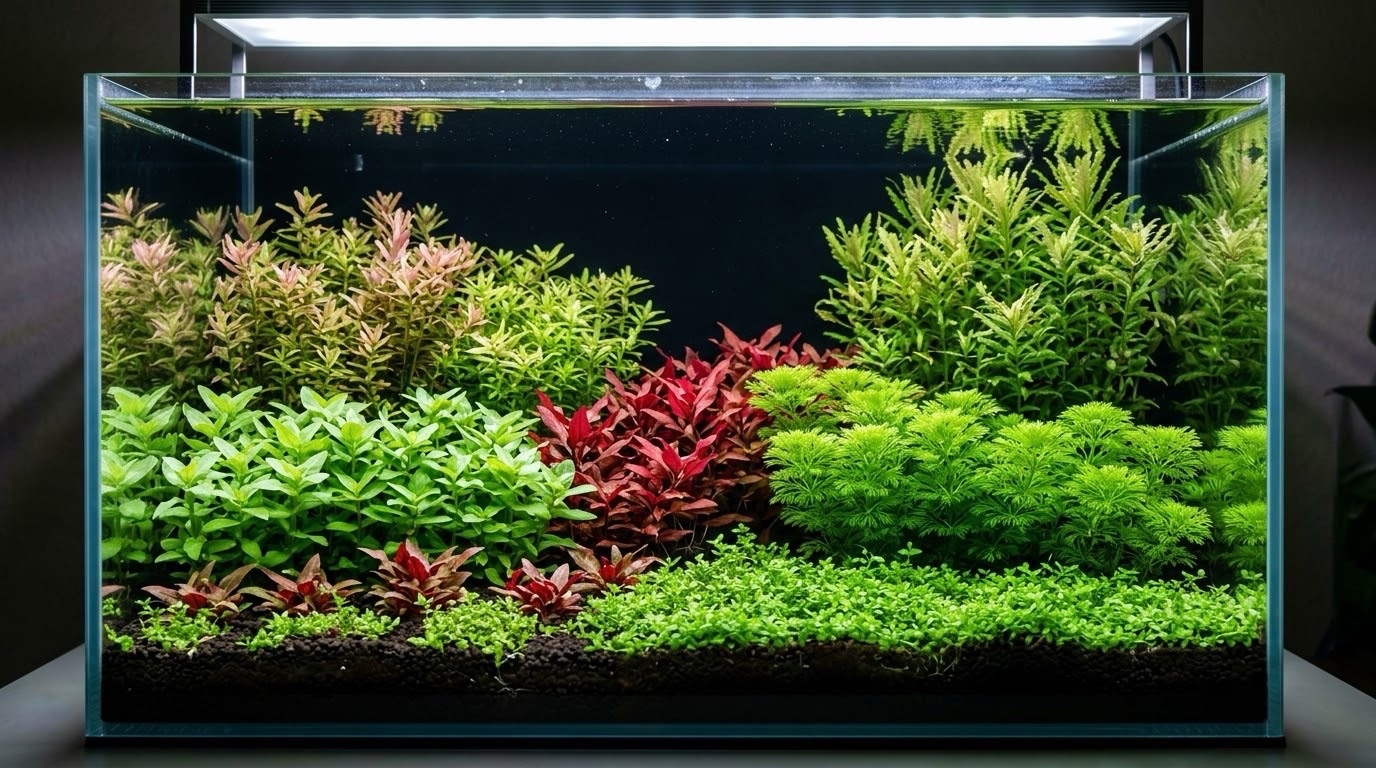
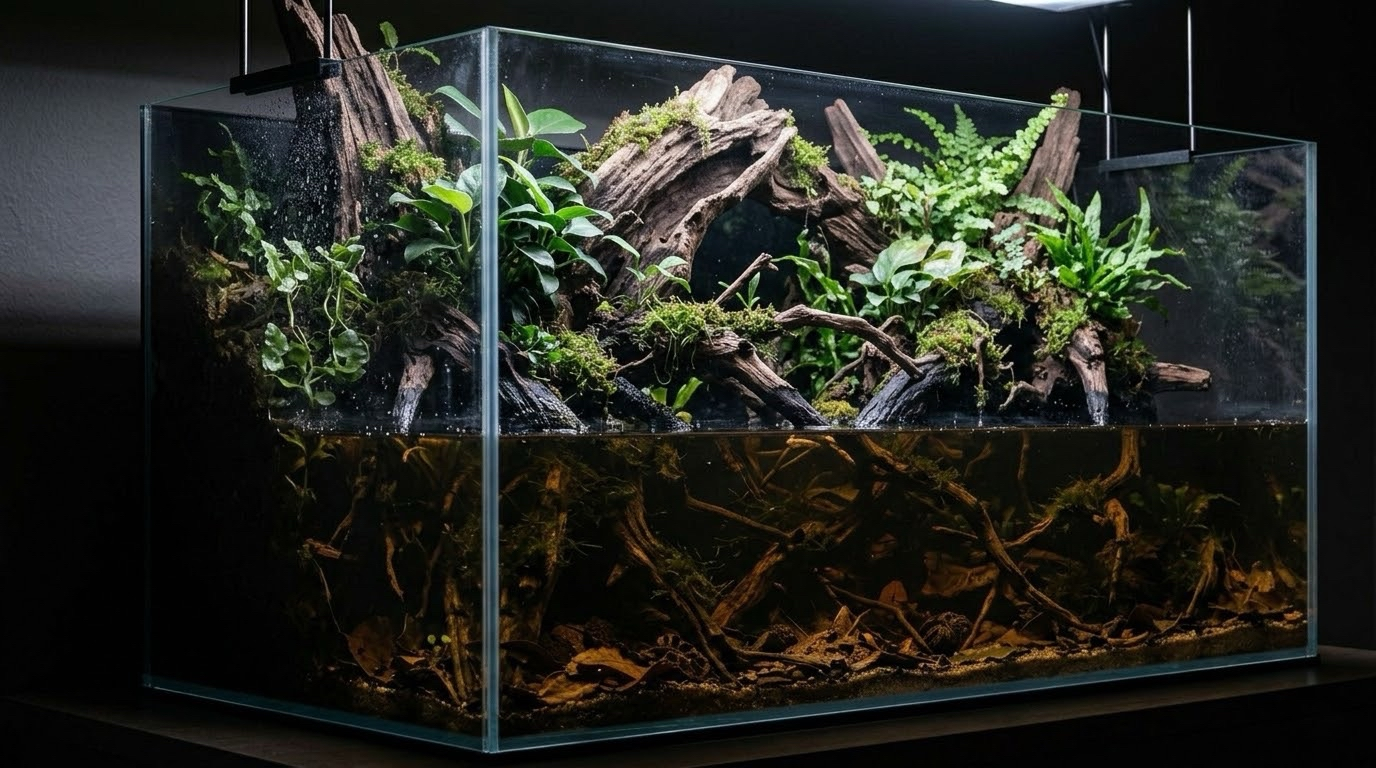
Three angles on the iwagumi school, wide composition, mid-detail, and macro.
Wide composition
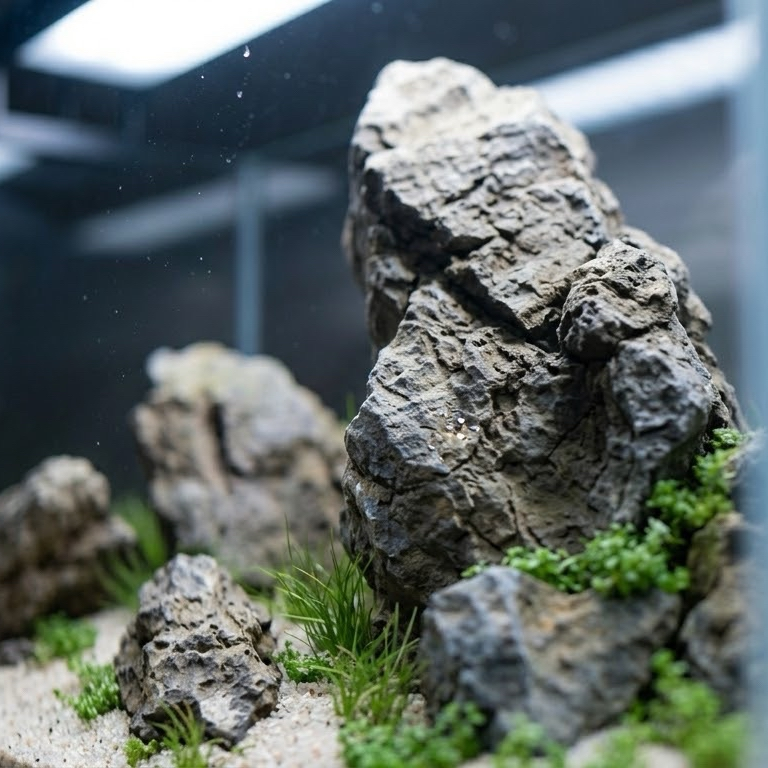
Mid-detail
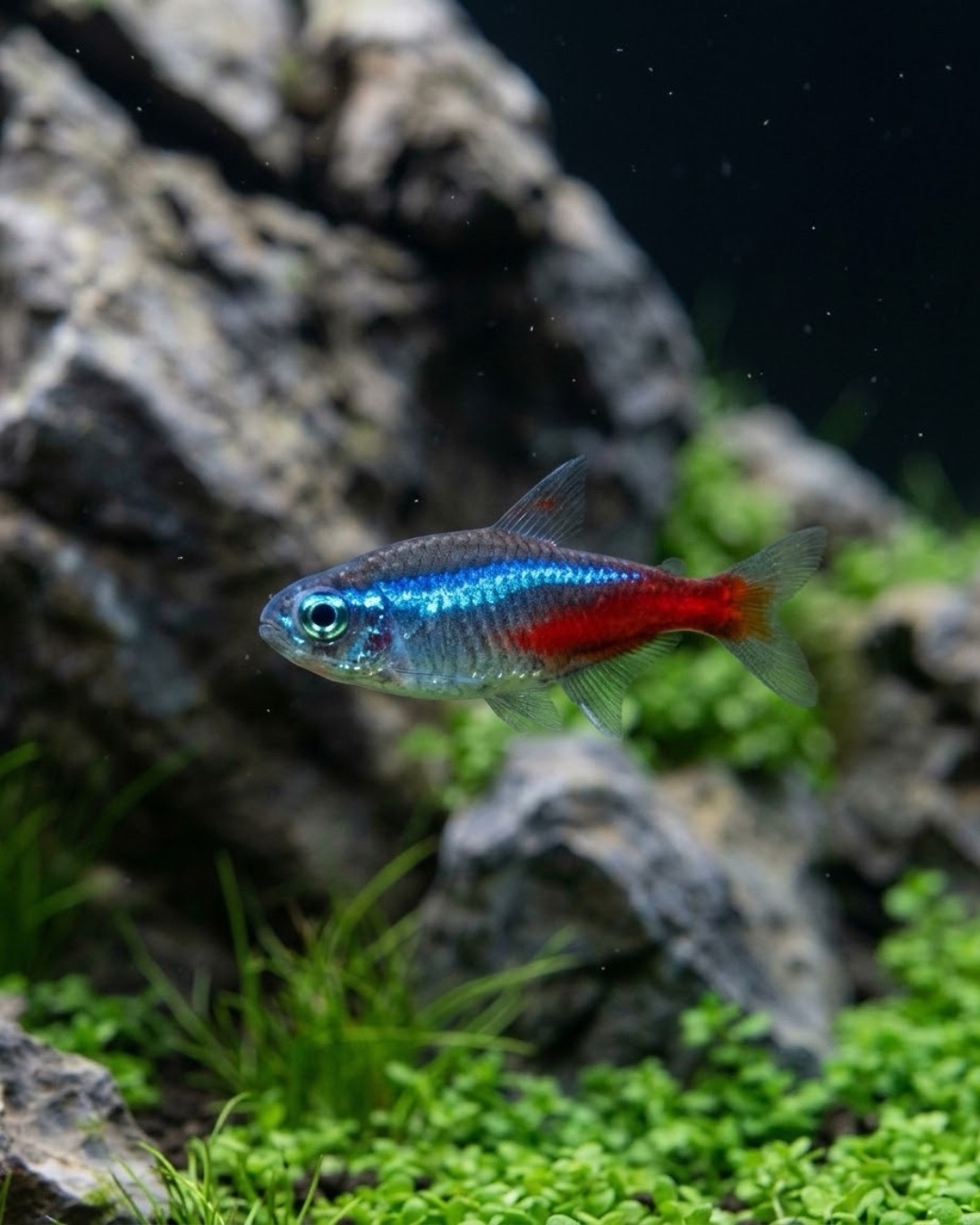
Atmosphere
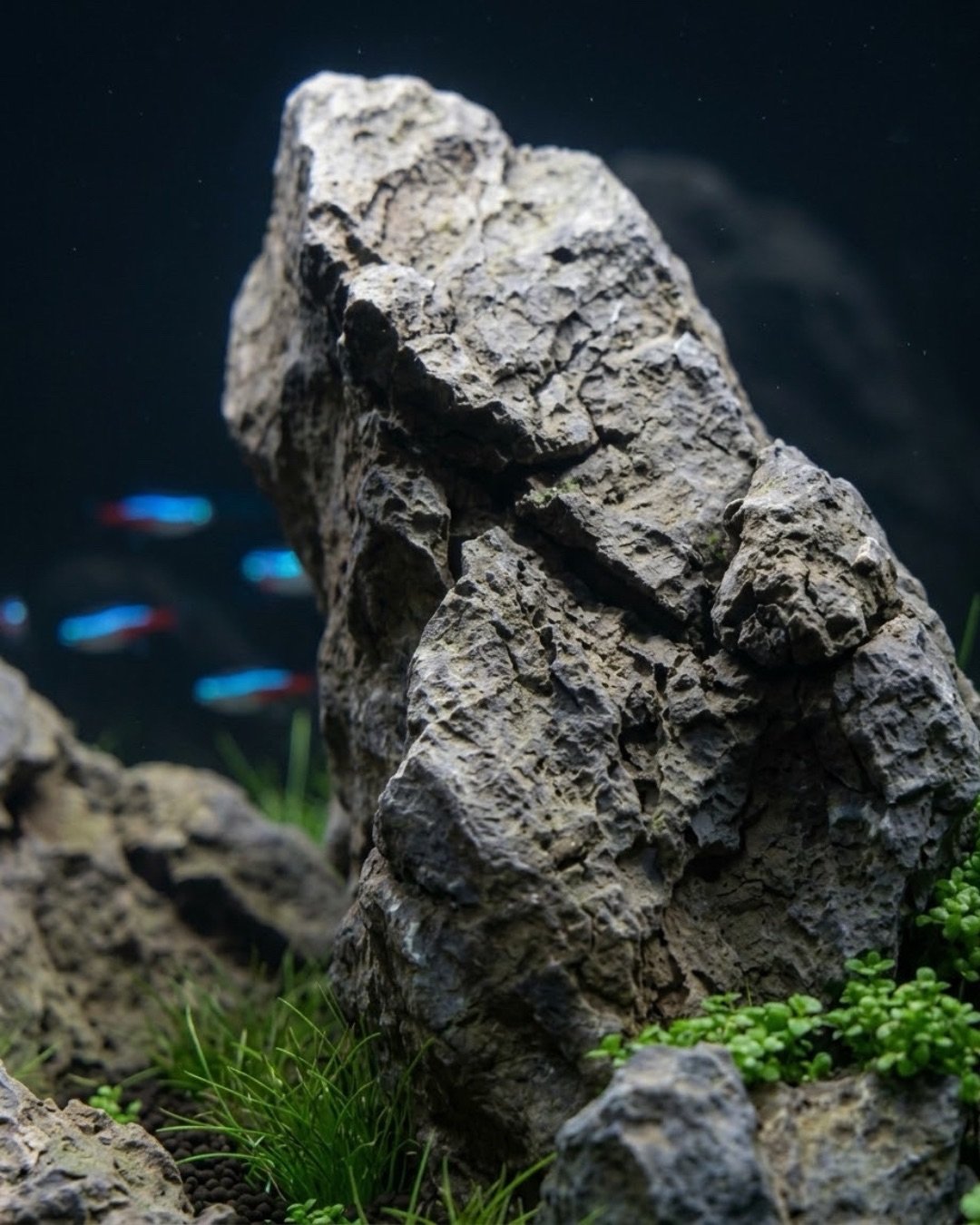
Close detail
Plants
The flora most often used.
A working palette, not exhaustive. We adjust species to your water, lighting, and maintenance tolerance.
Dwarf hairgrass
Eleocharis acicularis 'Mini'
Dwarf baby tears
Hemianthus callitrichoides 'Cuba'
Glosso
Glossostigma elatinoides
Dwarf four-leaf clover
Marsilea hirsuta
Livestock
Fish and invertebrates that suit.
Species that read visually with the style and tolerate its water conditions. Stocking order matters. We sequence it in your plan.
Kubotai rasbora
Microrasbora kubotai
Chili rasbora
Boraras brigittae
Celestial pearl danio
Danio margaritatus
Crystal red shrimp
Caridina cantonensis
Specifications
The practical details.
Difficulty
Intermediate
Recommended tank
60–120 cm, rimless preferred
Substrate
Aqua soil base hidden beneath stones, fine sand foreground 1–3mm
Lighting
Medium-high, 6–8 hours daily
CO₂
Pressurized CO₂ recommended for tight carpets
Water chemistry
Soft to medium, pH 6.5–7.2
Best for
Those drawn to minimal interiors, Japanese aesthetics, and the meditative quality of restraint.
Begin in this style
A Iwagumi tank,
for your space.
Tell us about your room, your budget, and how hands-on you want to be. We'll send back a tailored plan in this tradition.
Other Styles